
Meet our Summer Student: Anqi Guan
My summer in a Neuroscience Lab
The brain is one of the most complex organs in the human body. This summer, I spent most of my time looking at the cells that make up the brain and the tiny connections they make to other brain cells - or what are called neurons. These are things far too small to see with the naked eye. From individual synapses to slices of brain tissue, my summer in the Siddiqui Lab taught me that sometimes, understanding the bigger picture means starting incredibly small.
The project I worked on focused on a protein called neurexin-2 (NRXN2). Neurexins are found at synapses, the connections between neurons that allow them to communicate with one another. These proteins can exist in different forms through a process called alternative splicing, where different sections of the protein can be included or excluded. Our project focused on one particular region of NRXN2, called Site 5, and aimed to better understand how its removal affects synapses.
One part of my project involved using electron microscopy (EM) to examine individual synapses and measure their detailed structures. It was a completely different way of thinking about the brain, zooming in from an entire brain to structures only a few micrometres across.
I experienced that same shift in scale while learning cryostat sectioning, where frozen brain tissue is cut into extremely thin sections for analysis. It was incredible to work with tissue only a few micrometres thick and know it came from an entire brain.
The goal is to cut these thin slices of brain tissue and stain it to visualize proteins of interest. This technique is called immunohistochemistry (IHC), which uses antibodies to visualize specific proteins within tissue. I was working with antibodies against VGLUT1 and GAD65 to look at excitatory and inhibitory signalling in the brain. But of course, research rarely goes exactly according to plan.Getting the IHC protocol to work was not as straightforward as I expected. For almost three weeks, I was troubleshooting different parts of the process. I had to pay attention to small details, think through each step, and make changes one at a time. There were definitely moments when I felt like I was going in circles, but it ended up being one of the most valuable parts of my summer.
It taught me that troubleshooting is not something that happens outside of research—it is research. When something does not work, there is a reason, and figuring out that reason means asking questions, testing possibilities, and learning from each attempt. This experience taught me to be much more comfortable with not immediately having an answer.
Looking back, I came into the lab expecting to learn research techniques. I definitely did that, but I left with something more: a better appreciation for the patience, curiosity, and persistence that happens behind the scenes of every research project.
Although I can't share the full story of what we found just yet, I'm excited to see where this project goes as the larger study comes together.
I am incredibly grateful to Dr. Tabrez Siddiqui and the entire Siddiqui Lab team for their guidance, support, and mentorship throughout the summer, as well as ENRRICH for making this research experience possible. I am excited to carry what I learned into the rest of my studies and future endeavors.
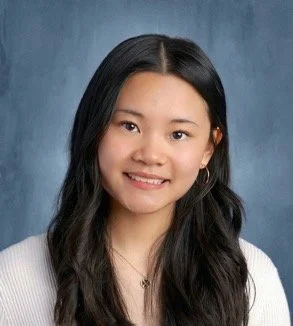
About the author
Anqi Guan (she/her)
Anqi is a second-year Health Sciences student at Queen’s University with a strong interest in healthcare and biomedical research. Her research interests include neuroscience, cellular biology, regenerative medicine, and understanding how scientific research can contribute to improving patient care. Outside of research, Anqi enjoys exploring new places, spending time with friends, and getting involved in her community.
Published October 1, 2026