
From Fruit Flies to Finding Answers: My Experience with the Undiagnosed Hackathons
When I applied to attend the Wilhem Foundation’s third Undiagnosed Hackathon at the Mayo Clinic in Rochester, Minnesota, in September 2025, I wasn't entirely sure what I was signing up for. The Wilhelm Foundation leads the Undiagnosed Hackathon, and describes it as “a global, collaborative initiative...to shorten the diagnostic odyssey for People Living with Undiagnosed Diseases”. As a researcher who studies rare neurological disorders using fruit flies (Drosophila melanogaster), I was intrigued by the opportunity to contribute to solving undiagnosed medical cases, but I had little idea of what the experience would actually involve. Although my work has helped solve medical mysteries in the past, it required months of experiments at the lab bench.
What I discovered was one of the most rewarding scientific experiences of my career, and I have now been able to participate in multiple Hackathons, and will continue to do so, in an effort to help families around the world.
Bringing different expertise together
The Undiagnosed Hackathons bring together clinicians, geneticists, bioinformaticians, researchers, and other experts from around the world for an intensive collaborative effort to find answers for individuals and families living with undiagnosed diseases. Many of these individuals have spent years searching for a diagnosis, often undergoing extensive genetic testing without finding an answer. During the Hackathon, teams work together to review clinical information, analyze genomic data, investigate candidate genes, and explore new approaches to solving these difficult cases.
At the Mayo Clinic in 2025, I had the opportunity to meet researchers from a wide range of disciplines, including fellow Drosophila geneticists such as Dr. Shinya Yamamoto, whose work with the Undiagnosed Diseases Network (UDN) has demonstrated the value of model organisms in understanding rare human diseases. One of the things I found particularly exciting was realizing just how much our expertise could contribute. Clinicians bring an understanding of the individuals' symptoms, while bioinformaticians help identify potentially important genetic changes among millions of possibilities. Researchers like myself can provide insight into what those genes actually do, how they function in living organisms, and whether a particular genetic change might explain an individuals condition. It was a powerful reminder that no single discipline has all the answers. Sometimes, a conversation between a clinician, a bioinformatician, and someone who studies fruit flies can lead to an entirely new way of looking at a case.
Putting families at the centre
What makes these Hackathons particularly special is the atmosphere created by Helene and Mikk Cederroth, the founders of the Wilhelm Foundation. Having experienced the devastating consequences of undiagnosed disease within their own family, Helene and Mikk have dedicated themselves to helping others find answers. Despite bringing together internationally recognized experts, the Hackathons feel remarkably non-hierarchical. This is by design from Helene and Mikk. For example, credentialism is avoided. There is no sense that one person's expertise or title is more important than another's. Everyone is encouraged to contribute, ask questions, and challenge ideas. Trainees work alongside senior scientists, clinicians exchange ideas with basic researchers, and many families are present that helps everyone, all sharing the same goal.
It was also important that the term “patient” was not used in these discussions, recognizing that it is families and people behind each case. Meeting families and hearing about their experiences makes the importance of the work immediately apparent. A diagnosis or even a strong lead can provide answers after years of uncertainty, inform medical care, and help families connect with others facing similar challenges.
From Mayo Clinic to Hyderabad, India
Following my first Hackathon, I was fortunate to participate in the next event in Hyderabad, India, in February 2026. This was another incredible and collaborative experience. One aspect of the Wilhelm Foundation's mission that I particularly admire is its commitment to holding Hackathons in low- and middle-income countries (LMICs). Access to advanced genomic testing, specialized clinical expertise, and rare disease research is not equally distributed around the world. By bringing international expertise and collaborative diagnostic approaches to different regions, the Foundation is helping expand access to resources and opportunities that might otherwise be unavailable.
The experience in Hyderabad reinforced for me that rare disease research must be a global effort. Scientific expertise exists everywhere, and meaningful progress depends on creating opportunities for researchers and clinicians to work together across geographical and institutional boundaries.
Singapore and becoming a Hugo Fellow
In September 2026, I had the honour of returning for the fifth Undiagnosed Hackathon, held in Singapore, this time as one of the inaugural Hugo Fellows. The fellowship is named in memory of Hugo Cederroth and recognizes individuals who have contributed to the Hackathons and are committed to continuing the search for answers for people living with undiagnosed diseases.
This event was particularly meaningful for me because I had the opportunity to help lead one of the multidisciplinary teams. Over the course of the Hackathon, our team worked through challenging clinical and genetic data, shared ideas, debated possible explanations, and ultimately identified promising diagnostic answers for two cases. Being part of a team that helped move two families closer to answers was incredibly rewarding. It also reinforced how much can be accomplished in a short amount of time when people with different expertise come together with a shared purpose.
The following video captures some of the experience and collaborative spirit of the Singapore Hackathon.
https://www.youtube.com/watch?v=hVyCWzxf7-c
Looking ahead
What started as an application to an event I knew relatively little about has become an important part of my professional and personal journey. Beyond the science, I have built friendships and collaborations with researchers and clinicians around the world, all united by a desire to help families living with undiagnosed diseases. Sometimes, finding answers requires looking at a problem through a completely different lens. And sometimes, that lens happens to be a fruit fly. I am already looking forward to the next flagship Undiagnosed Hackathon, planned for Brazil in fall 2027.
For trainees and early-career researchers, I cannot recommend this experience enough. You do not have to be a clinical geneticist or an expert in genomic diagnosis to make a meaningful contribution. Whether your background is in molecular biology, model organisms, bioinformatics, neuroscience, or another field, you may bring exactly the perspective needed to help solve a difficult case. I have been fortunate to get to represent ENRRICH, CHRIM and the University of Manitoba at these Hackathons. If you are interested, I encourage you to keep an eye on the Undiagnosed Hackathon website for future opportunities to apply.
Published November 2, 2026
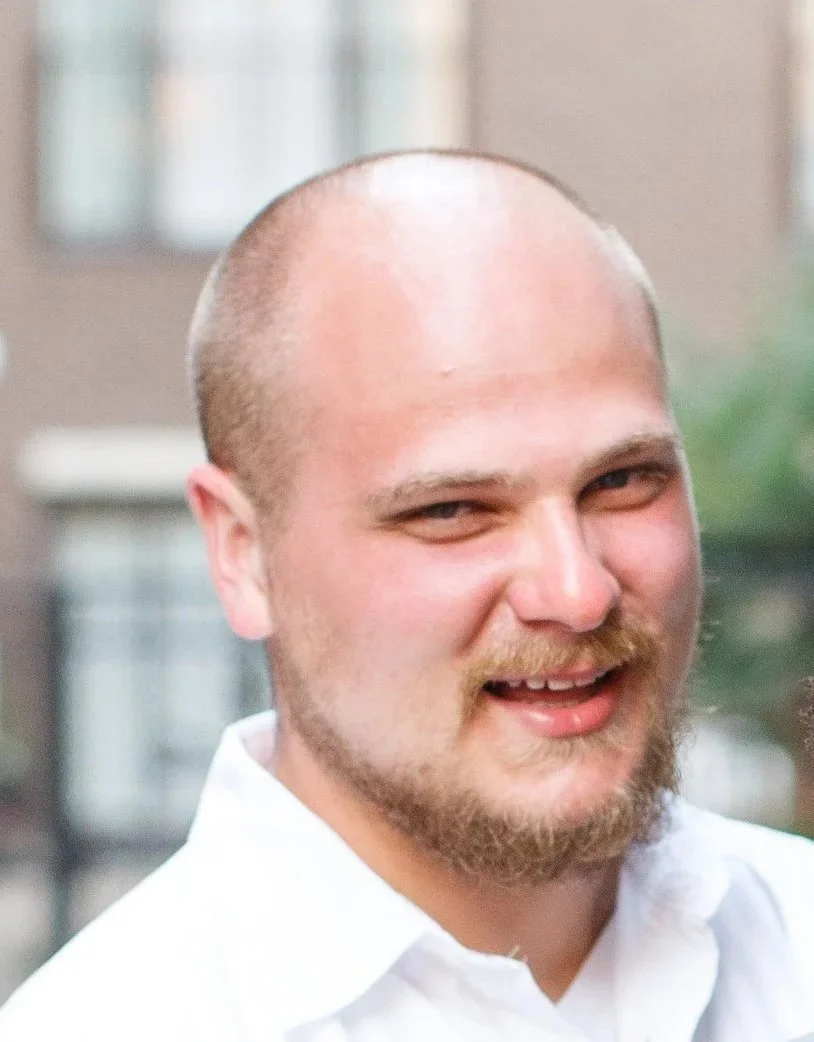
About the author
Dr. Paul Marcogliese is an Assistant Professor in the Department of Biochemistry and Medical Genetics at the University of Manitoba. His research uses model organisms, including fruit flies, to understand the genetic and molecular mechanisms underlying rare neurological disorders.