
Meet our Summer Students: Thomas Vermette and Camilo Venegas Montenegro!
Thomas Vermette: Finding A Protein in A Pipette Stack - Discovering Your Passion as an Undergraduate Researcher
The world of research in science.
Scientific research is so vast and diverse. Even in specialized fields like neuroscience, there are many paths of study one can follow. While the opportunity to explore the extensive and diverse opportunities is very exciting, it can also be intimidating to new students interested in research. I speak from experience, as I was one of those overwhelmed undergraduates looking for research opportunities over the past few years. With some helpful advice from professors and fellow students, I was able to begin my research journey in a field that interests me. I have outlined my experience below.
-
My experience in the lab.
You may be wondering what part of the research world I find myself in. In my third year at the University of Manitoba, I took a class in pharmacology and really enjoyed the content. One lecture section really stood out to me: the content was engaging, interesting, and well delivered. I then started talking to the professor of this section and inquired about his research. After being awarded an ENRRICH Summer Studentship, I am now doing GPCR (G-Protein Couple Receptor) pharmacology research in his lab. His lab primarily focuses on synaptic receptors often related to excitotoxicity or in simpler terms; receptors on neurons that are often overstimulated by neurotransmitters. One of the research goals that I am working on is exploring the effects of Neurexins (synaptic-adhesion proteins) on metabotropic-glutamate-receptor 5 (mGluR5), a well-studied GPCR. Understanding the functional aspect of this protein interaction can help us better understand neurodevelopmental conditions like attention deficit hyperactivity disorder (ADHD), autism spectrum disorder (ASD), and Fragile X syndrome (FXS). It may also lead us to developing novel therapeutics for these conditions and help individuals living with these conditions, especially children and youth as these neurodevelopmental conditions can sometimes be hardest on them.
Finding your field of interest.
With so many possible research fields and opportunities, how do you find your place? I think it’s important to spend your first year exploring interesting classes and subjects, whether it be biology, physics, chemistry, or any other science focus. From there, you can focus your interests on a more specific field and start taking classes related to that interest. From my experience, classes that had a new professor for each lecture session or chapter were very helpful because I was exposed to new niche fields and met different professors looking for new undergraduate students. These classes are often only offered after the first year due to their more focused content.
Some advice that helped me get started.
After you have found the subject that most interests you, start taking classes in that topic and engage with the material. When I was beginning my research journey, I was told that it is very important to read about the professor whose lab you are interested in joining. This is not only to gain a better understanding of what they do, but also to confirm that it is the right fit for you. Then I would suggest sending a personalized email to them explaining why you are interested in their research and how it would be important for your career or studies. I would recommend a brief email because professors are often quite busy, especially during the fall and winter semesters. It may also be beneficial to talk to your professor in person after classes and ask about their research and inquire about their intake of summer students. If you have made a connection with a professor and they seem open to accepting summer students, do not be afraid to email them any additional questions that you have. Do not be surprised by slow responses, but also, there is nothing wrong with a reminder email after a week. While you are waiting to get started in the lab, it would be useful to look into summer studentship programs like those offered by ENRRICH (see here), the Children’s Hospital Research Institute of Manitoba (see here), the University of Manitoba’s summer research award (see here), or the Science Co-op (see here). Some professors may also be open to hiring summer research students. Volunteering, if financially viable, is another option to gaining exposure to summer research, building a resume, and exploring potential areas for specializing.
My advice for new researchers.
Once beginning in a lab and getting started with your research journey, you may feel a little overwhelmed by all the new techniques you have to learn on top of all the new theory and literature that you have to understand. Some advice I would give to new researchers is to not be afraid to ask your lab-mates and your supervisor about any scientific question. You are not expected to have a comprehensive understanding of your field immediately upon starting your research; it is important to have patience with the content and most importantly have patience with yourself. With regards to actual lab work and techniques, just know that like any other skill, practice and time will make you much more comfortable and proficient. Lastly, do not underestimate the time that some experiments will take. If you try to take on too much work at once in the lab, it may lead to an overly confusing protocol and an unproductive experiment. Rather work your way up to more complicated experiments as you feel comfortable and you will do great!
Camilo Venegas Montenegro: Determining the Functional Outcomes of PAK1 Variants Using the Fruit Fly - Starting a Research Journey as an Undergrad Student
When I started my degree in Genetics, I was introduced to many theoretical concepts that made me interested and curious about science and academia. Courses like biochemistry and biology sparked my interest in exploring the microscopic world and helped me find passion in attempting to perform research and be part of the scientific community.
-
As time went on and I kept taking different classes, progressing in my degree, I began to see how the theories I was learning in lectures could be connected to real experiments and historical discoveries. Each course added another layer to my understanding and made me eager to step outside the classroom and experience what research actually feels like. I began by asking students who had already been in labs how they managed to start. Understanding the different positions that are in labs and how they work was their first recommendation. Importantly, even though the information is relatively simple, I was unaware at the time – you don’t know what you don’t know. Using the University of Manitoba website and Google I came to understand that many of the biomedical labs at UM have doctoral and master’s students, lab technicians, and some undergraduate students. Then I researched the different opportunities that would be possible for an undergrad student. At first, this process was very intimidating, with many emails not being replied to and both the fear and reality of being rejected multiple times. I started to doubt if it would be possible for me to do research. But I stayed tenacious! I realized that connecting to other students and professors, and using online tools like LinkedIn or Googling different research institutions, helped me get started in this journey.
At this point, I came across the ENRRICH summer studentship opportunity, which provided me with high hopes as I realized there were other summer funding opportunities besides the very well-known University of Manitoba URAs or USRAs that provide opportunities to for summer undergraduate research. I read about the different professors associated with CHRIM and I came across Dr. Marcogliese’s research, a member of the Department of Biochemistry and Medical Genetics. I decided to contact him and see what projects I could hopefully join.
After discussing with Dr. Marcogliese about the ENRRICH opportunity, we both agreed that I should apply and, if awarded, he would be my supervisor. This brought me great joy as my goal to do research seemed more possible and closer to becoming reality. After I received the news of the fellowship, I was very excited to help Dr. Marcogliese in his lab.
At first, I felt a bit overwhelmed in the lab with all the information and genetics knowledge I needed to understand to grasp the project and its goals. Luckily, I was paired with a graduate student mentor, David di Iorio, a Genetic Counselling Masters student. The project I have been working on is called “Determining the functional outcome of PAK1 variants using Drosophila melanogaster” or, more simply, using fruit flies to study how changes in a gene called PAK1 lead to neurodevelopmental disorders with a range of different symptoms in children. It was very interesting to me that fruit flies can be used to help understand these disorders. It was somewhat anxiety-inducing learning all the techniques in the lab. I was very cognizant not to disrupt experiments from the lab. But with time and patience, I learned how to manipulate these uniquely modified flies. I also learned a lot about what I want to do for my own career, which is to conduct rigorous science and hopefully create useful knowledge for people and medicine.
This opportunity in Dr. Marcogliese’s lab, funded by ENRRICH, has been an incredibly valuable experience that allowed me to learn more about the biochemical importance of different neurodevelopmental conditions and the role of the PAK1 gene. I found it fascinating how such a small protein can have such a large impact, and how studying its variants can help us better understand these conditions in the future. Beyond science, this experience was also ideal for me as a student, as it gave me the chance to contribute to real research and feel connected to the scientific community.
Published October 1, 2025
About the Author
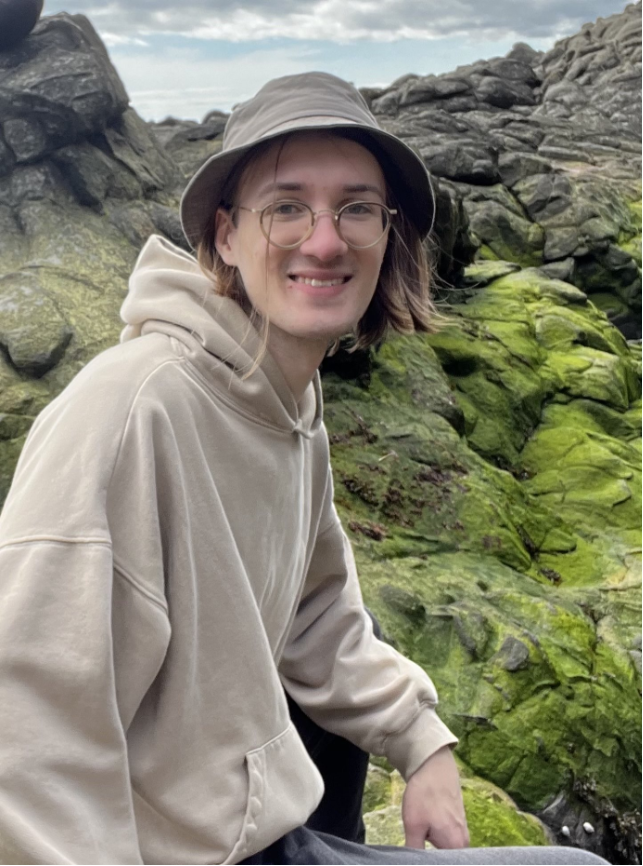
Thomas Vermette (they/them)
Thomas is currently finishing a Bachelors of Science in psychology and chemistry. They plan on pursuing graduate studies in pharmacology and therapeutics following their bachelor's degree. Thomas also spent part of their undergraduate studies working with the University of Manitoba’s nursing education program working in the nursing simulation and skills department.
About the Author
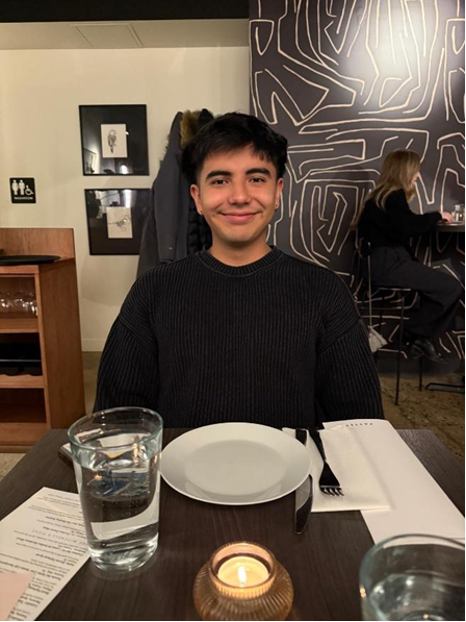
Camilo Venegas Montenegro (he/him)
Currently completing a Bachelor of Science with a Major in Genetics at the University of Manitoba, with plans to pursue a Doctor of Pharmacy degree (PharmD). Passionate about science, research, and the application of knowledge to improve healthcare and society.