
The Tale of Two Surveys: An Example of Research Course Correction for Cultural Safety
Did you know you can visually map the process of sharing information? A research method called social network analysis (SNA) helps us to explore the patterns of connections among individuals and organizations. We are using this method in our Connecting for Care study, to explore the patterns of information-sharing connections between individuals and organizations, in the field of child development and rehabilitation.
Why are we doing this study?
We know there are many ways that people can find or share information. And we know there are many barriers and enablers to sharing information. By mapping out connections and having a detailed understanding of what can make information sharing easier for different groups of people, we can identify which strategies will be most helpful to make sure the right information gets to the right people at the right time.
Finding a good path forward
In this post, we explain how we had to stop our study before it started – to prevent harm and to foster true inclusion. We feel it’s important to share examples of taking a new path, as a reminder that we should routinely apply a critical and reflexive lens to our work. Partnership, diversity, and trust within a team is crucial for conducting research that can be accessible and safe for all participants. This post tells the story of how ONE SNA survey became TWO surveys in the Connecting for Care project.
Survey One: Our original plan.
We were using a well-established research approach (SNA). Our SNA survey asked participants to name up to 5 key people with whom they exchange knowledge, and to list networks (e.g., research, clinical, community) to which they belong. We included researchers, clinicians, and those who held formal roles to share knowledge. We also included family members who were involved in research or health care improvement as partners. Then as we got close to launching the survey – we had a realization. Our original project plan was flawed!
We realized this because in pilot testing the survey, many family members, even those with some experience in research, had difficulty understanding who they should name in the survey. Through discussion as a team, Co-Investigator and Wisdom Translator, Guu Gaa Jung (English name Symbia Barnaby), raised additional concerns. If we limited participation to those with health- and research-partnership experience, only a limited number of family members would be eligible to take part in this study. Although family partner demographics in health- and research-partnership are slowly changing, those eligible for the survey would predominantly be middle-class white women. Though they are early champions of the patient engagement space, a group without representation cannot speak for those who have additional/systemic barriers to partnering in research (e.g., language, socio-economic status). (Note: Michalak and colleagues provide a great overview of “where we are now” in patient-oriented research within this article.)
By focusing only on this subset, we exclude the valuable perspectives of diverse families with children with development or rehabilitation support needs who haven’t had the opportunity or capacity to partner on health care improvement or research. Further, by asking families to identify themselves and name others (as is common practice with SNA surveys), without trust and relationships in place, we could be creating an unsafe research environment, leading to self-exclusion from the work, or harm for those who may be more hesitant or averse to engaging with the health care system. This approach was colonial. With humility, we went back to the drawing board.
Survey Two: Change of plans.
The usual SNA naming survey was not going to work to reach a diverse population of families. We were advised that an approach like that may especially exclude or do harm to Indigenous families, because of systemic bias and racism within the health system. Our major shift was to include a second survey: one specifically for families of children with development or rehabilitation needs, which allowed for anonymous participation.
It was clear that this would take extra time and resources, but that it was necessary to move forward in the best and most just, equitable way. And that, in short, is how we went from one survey, to two.
Next steps!
We have been so fortunate to have heard from an amazing group of people who responded to the first (SNA) and second (Family) surveys! We have analyzed the data and are interviewing members of each group. We are in the long and careful process of learning more from the surveys and interview transcripts to summarize common barriers, facilitators, and strategies to improve knowledge sharing in the field of child development and rehabilitation. Our ultimate goal is to generate recommendations to improve knowledge exchange within and across these groups so that children and families have access to the safest, most effective health care available, and all groups have the information they need to make informed decisions.
Published March 4, 2025
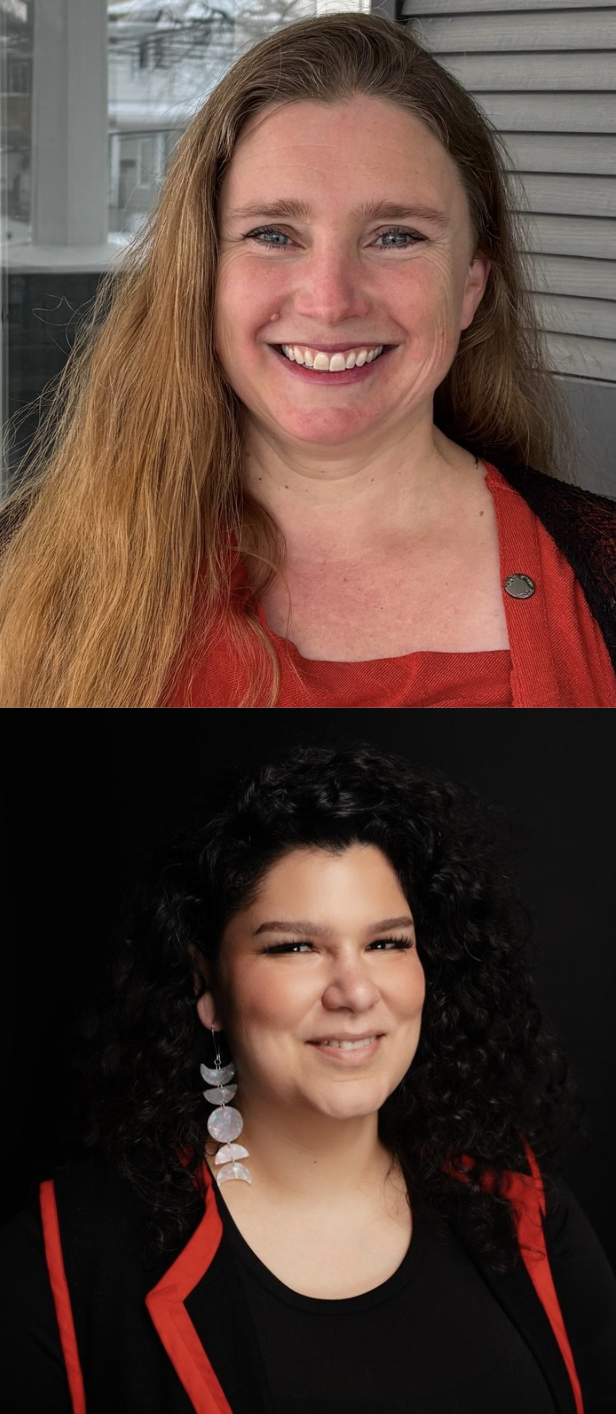
ABOUT THE AUTHORs
Carrie Costello is the Parent Lead of the ENRRICH Network at the Children's Hospital Research Institute of Manitoba. Her work in research involves supporting and connecting with children, youth and parents in various ways to make sure the information and feedback they give is brought forward and addressed. She is also the co-chair of the Specialized Services for Children and Youth (SSCY)/Rehabilitation Centre for Children (RCC) Parent Advisory Council in Manitoba, the Parent Liaison for the CHILD-BRIGHT Pan-Canadian Research Network and she leads engagement with the Youth Advisory Council in the Maternal Infant Research on Environmental Chemicals (MIREC) Cohort Study.
Symbia Barnaby is an Indigenous woman with Haida and Mi’kmaq belonging and descent. She currently lives on the traditional unceded territory of the Coast Ts’msyen People, on what is known traditionally as kxeen. Her traditional feasted Haida name is Guu Gaa Jung and her spirit name is Warrior Woman. She is a single mother of 6 children (5 of which have neurodevelopmental support needs). She is trained as a Practical Nurse, a Reiki Level 3 Practitioner and, a Traditional Helper. Symbia is a fierce Community Inclusion Advocate and Community Researcher. She is also a storyteller, a filmmaker, and a Wisdom Translator.
Symbia volunteers with several community based organizations aimed at supporting the healing of generational and systemic trauma. She has developed and run workshops on decolonization, anti-racism, health equity, inclusive education, disability and intersectionality. She also consults on research projects with various agencies and with individuals wanting to understand equity, policy and protocols through an Indigenous lens with her business called Healing Nation Coaching and Consulting