
Q & A with ENRRICH's Interim Co-Lead – Dr. Paul Marcogliese
We are happy to announce that Dr. Paul Marcogliese will be acting as our ENRRICH interim co-leader. While Dr. Marcogliese has been involved with all things ENRRICH over the years, we wanted to give him an opportunity to introduce himself as a co-lead and provide his personal and professional background .
Can you briefly introduce yourself and tell us about your research background?
My name is Paul Marcogliese (pronounced Mar-Ko-Yay-Zeh), he/him. I am a white settler, born in Edmonton, raised in Ottawa and arrived in Treaty 1 in Summer of 2022 after a six year postdoc in Houston, Texas. I am what is considered a ‘basic’ or more aptly, ‘fundamental’ scientist and my research is focused primarily on the genetics of neurodevelopmental and neurodegenerative disorders. My lab uses animal models to determine how these genes and the variants observed in patients act in order to shed insight into care and treatment.
What motivated you to take on the interim co-lead role with ENRRICH, and what are you most excited about?
I think ENRRICH has a grand opportunity to pull in fundamental scientists from across the Manitoba research environment to share and collaborate with our clinical and translational colleagues who are doing amazing work. It can be a challenge to get many of us outside the laboratory and interacting with clinicians, patient families, and other stakeholders. However, research will only improve with more interdisciplinary collaboration, open sharing, and patient engagement. I think I can help further galvanize many of the fundamental scientists to play a meaningful role in ENRRICH which will mean increasing the impact of the science for patient-families and the public.
How does your own research align with ENRRICH’s mission and goals?
A large part of my research program uses a model organism called Drosophila, or commonly known as fruit flies (please see previous blog post for details). Briefly, we use these animals to model rare neurodevelopmental conditions and ascribe meaning to patient gene variants in an experimental system. These animals become “patient avatars” that reflect the DNA change in a patient which can then help precision medicine efforts in finding therapies. My research program is intimately tied to novel research in pediatric neurodevelopment and I hope our findings lead to an increased quality of life for children in Manitoba and beyond.
What are some key priorities or projects you're looking forward to advancing at ENRRICH over the next year?
Last year, I led organizing the first ENRRICH Research Day (see blog post). This next year, I hope to support the organizing committee in keeping the enthusiasm high in our research community for the 2nd ENRRICH Research Day to take place in September. Secondly, ENRRICH has been a key supporter of its researchers by providing research funding through the Catalyst Grant program. I think a key part of knowledge translation does not stop when a paper is published. We need to translate our findings to patient-families and the broader public. I look forward to facilitating public engagement events to show work done by our funded researchers. Lastly, I want to strive to find meaningful and mutually beneficial ways to increase trainee engagement and bolster the ENRRICH identity for our trainees. This means shining a spotlight on our trainees giving them opportunities to share their work and ‘get their flowers’.
Can you tell us about your experiences working collaboratively with families, patient partners, and other researchers? How will these shape your approach as interim co-lead?
Working in the rare disease space gives me ample opportunity to work with patient-families and make new research collaborations. When 10-500 people in the world are affected by a given rare disorder, the patient-families do a great job at connecting to each other and researchers. I get to meet families at rare disease conferences and get to connect with other researchers working on the disease. I think my experience will help other fundamental scientists connect and engage with patient-families both locally in Manitoba but also taking advantage of the ability to connect to patients worldwide.
ENRRICH emphasizes equity, diversity, and inclusion. How do these values impact your research philosophy and leadership style?
Since starting my position, I have admired and thought the ENRRICH theme is truly a leader in this space. Acknowledging my own privilege and recognizing the pervasiveness of systemic bias, I need to constantly check, reflect, learn, and be intentional about my process to EDI as a lab leader. The keys to my approach is to be a dynamic leader and be deliberate about EDI in hiring, retention, and our lab culture. I have an opportunity to use my privilege to raise up marginalized voices who want their voices raised. I know that practicing allyship means that I may misstep, but accountability, reflection, and reconciliation will be my process. Through ENRRICH, we have an opportunity to make meaningful contributions to specific Calls to Action related to Healthcare.
What unique perspectives or skills do you feel you bring to the ENRRICH leadership team?
I think I bring a fundamental science perspective to ENRRICH leadership. However, this is no way oppositional to clinical and translational research. I think my skills are very outcome driven and I hope to bring some “out of the box” thinking - after all, I do work with fruit flies. I hope this background and my openness to all our research within ENRRICH will help solve any challenges we have.
What role do you see ENRRICH playing in advancing autism and neurodevelopmental disorder (NDD) research, both locally and internationally?
This is a great question. As an autism researcher and the parent of two children diagnosed with autism spectrum disorder at Specialized Services for Children and Youth (SSCY), this is very dear to me. I think getting the word out that ENRRICH is the single largest collective of researchers focused on autism and NDD in Manitoba is critical. Much of the public is unaware about what we do and given the prevalence of autism, many are interested. ENRRICH can connect researchers who are working on very different aspects of autism and NDDs and help catalyze a team approach via catalyst grants and research sharing events. Beyond Manitoba, working together will help us show the world our research excellence leading to international collaborations, grants, and larger engagement.
Outside of your professional life, what activities or interests do you enjoy that help keep you energized and inspired?
At the moment I have three children (6, 4, and 20 months). In other words, my highly supportive partner and I are “in the thick of it”. My kids are my joy and oddly enough give me energy and inspiration (although admittedly it’s a lot of work). Walks, picnics in the park, splash pads, the zoo, the children’s museum are just some of our family activities.
On top of this, the diverse researchers and trainees at ENRRICH inspire our work everyday.
Published July 2, 2025
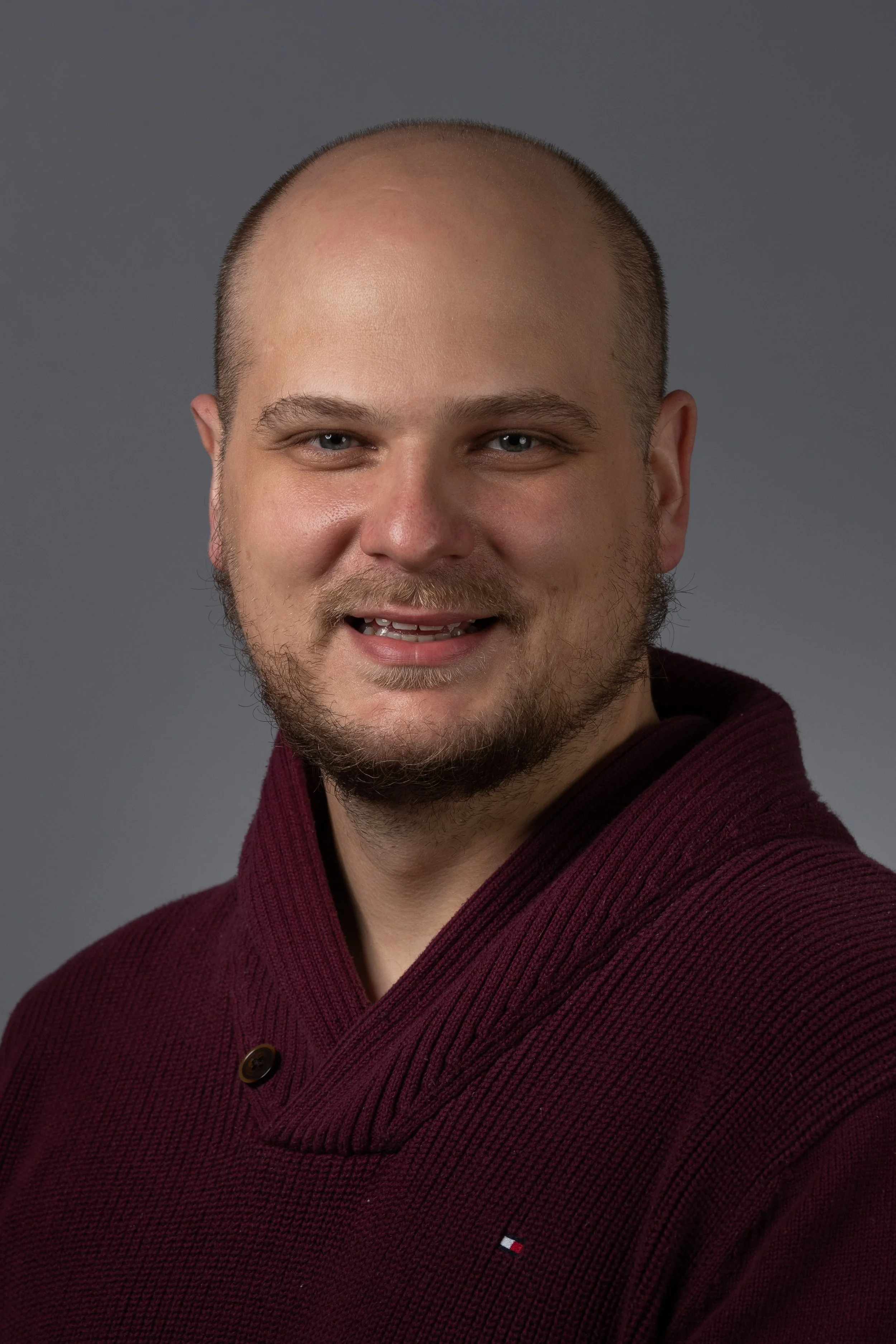
About the author
Paul Marcogliese, PhD conducted his doctoral studies at the University of Ottawa where he studied models of Parkinson’s disease in mice, fruit flies, and cell culture. He conducted his postdoctoral work at Baylor College of Medicine in Houston, Texas. There he learned sophisticated fly genetics and was part of the Undiagnosed Diseases Network using flies to help diagnose rare pediatric neurological diseases. He recently started his lab in the Department of Biochemistry & Medical Genetics at the University of Manitoba where he continues to use both fly and mouse models to investigate the molecular and cellular mechanisms underlying neurological disease.