
A Research Project about Nutrition and Down Syndrome in Manitoba
Currently, there are over 22,000 people living with Down syndrome in Canada. I have the privilege of being the primary caregiver and mom to one of them. My youngest son, Nick, is 11 years old and a grade 5 student in rural Manitoba, where we reside. He is an avid reader, a natural athlete, a good friend, and a kind human. Our family, his classroom and school, and our community, all benefit simply because he is among us.
When Nick was diagnosed with Down syndrome, I was told that he would likely develop nutrition-related conditions and diseases as he got older. As a dietitian, I was curious to learn more about nutrition research and evidence-based practice for children with Down syndrome. I was surprised to find out that there was very little current research conducted in this area, and none in Canada. In fact, in Canada, there is no current data surveillance about the nutrition-related health of people with Down syndrome. These revelations were disappointing. If we know that people with Down syndrome are more likely to develop nutrition-related conditions and diseases, then we need to understand what is their current nutrition-related health to inform meaningful care that aims to minimize their risk.
I wanted to design and conduct a research study that other parents and caregivers of children with Down syndrome would find meaningful and that reflected diverse experiences and perspectives. My PhD research project. My PhD research project is to determine the nutrition-related health of children with Down syndrome living in Manitoba, and to learn more about their experiences receiving nutrition knowledge and care. I met with parents and caregivers of children between the ages of 6-12 years old, who consented to be a part of the research project and share information on behalf of themselves and their child.
I was grateful for the opportunity to consult with parents and caregivers of children with Down syndrome living in Manitoba, whereas both parent and caregiver experiences inform several parts of the research project. Parent and caregiver engagement as research partners provided valuable insight and feedback, which was incorporated and reflected in several decisions throughout the research continuum such as: 1) determining research questions, 2) selecting data collection tools, 3) interpreting research findings, and 4) planning recruitment and knowledge translation and mobilization strategies.
Fourteen children with Down syndrome and their moms participated in the research study. Findings about the nutrient intake of children included the study were mixed:
Vitamin D, calcium, and fibre intakes were less than recommended amounts
Added sugars, saturated fat, and sodium intakes were greater than recommended amounts
Iron, protein, and carbohydrate intake were within recommended amounts
Study findings about other factors that may influence nutrition-related health among the children also included:
Most children had medical or family history of nutrition-related conditions or diseases
Most children were breastfed
Most children had specific food preferences or dislikes
Most children met daily physical activity recommendations
Most children exceeded daily screen time recommendations
Most children required help or supervision during eating times at home or school
Moms had concerns about their child’s food and beverage choices, body weight status, and overall health. Moms also shared that they experienced both positive and negative interactions with different health care providers who provided nutrition knowledge and care for their child with Down syndrome. Moms preferred to receive personalized, supportive, accessible, and non-judgmental care.
An index (NICK index) to measure the overall nutrition-related health of children with Down syndrome living in Manitoba was created based on the quantitative and qualitative data collected in this research study. Using the NICK index, the overall nutrition-related health of children with Down syndrome included in this study was determined to be not optimal.
The study sample size was small, so the research findings cannot be generalized to all children with Down syndrome living in Manitoba. However, the findings may be used to provide some insight and to inform the current practice of providing meaningful nutrition knowledge and care to parents and caregivers of children with Down syndrome. For example:
Knowledge of nutrient adequacy and other factors related to nutrition-related health is necessary to inform meaningful practice that minimizes the risk of developing nutrition-related diseases and conditions
The NICK index may be used to inform a comprehensive assessment of factors influencing nutrition-related health of children with Down syndrome
An understanding about the concerns and needs of parents and caregivers of children with Down syndrome is necessary to inform the provision of person- and family-centred nutrition knowledge and care
For more information about the research study conducted in Manitoba:
Nutrition-related health of children with Trisomy 21 and their lived experience receiving nutrition knowledge and care (NICK): a mixed methods study in Manitoba at: https://mspace.lib.umanitoba.ca/items/4419e55e-b86e-482c-b8e0-e77ebd58c69a
Nutrient intake and physical activity of school-aged children with Trisomy 21 living in Manitoba, Canada at:
-
Aslam, A.A.; Baksh, A.; Pape, S.E.; Strydom, A.; Gulliford, M.C.; Chan, L.F.; for the GO-DS21 Consortium. Diabetes and obesity in Down syndrome across the lifespan: A retrospective cohort study using U.K. electronic health records. Diabetes Care 2022, 45, 2892–2899. https://doi.org/10.2337/dc22-0482
Basil, J.S.; Santoro, S.L.; Martin, L.J.; Wusik Healy, K.; Chini, B.A.; Saal, H.M. Retrospective study of obesity in children with Down syndrome. J. Pediatr. 2016, 173, 143–148. https://doi.org/10.1016/j.jpeds.2016.02.046
de Graaf, G.; LaChance, L.; Buckley, F.; Skotko, B.G. Estimation of the number of people with Down syndrome living in Canada. Genet. Med. 2025, 27, 101422. https://doi.org/10.1016/j.gim.2025.101422
Landes, S.D.; Stevens, J.D.; Turk, M.A. Cause of death in adults with Down syndrome in the United States. Disabil. Health J. 2020, 13, 100947. https://doi.org/10.1016/j.dhjo.2020.100947
O’Shea, M.; Gibson, L.; Leo, J.; Carty, C. The prevalence of obesity in children and young people with Down syndrome. J. Appl. Res. Intellect. Disabil. 2018, 31, 1225-1229. https://doi.org/10.1111/jar.12465
Patel, P.; Sun, W.; Mataruga, A.; Fung, K.; Balogh, R. The incidence and prevalence of dementia among Ontario adults with and without intellectual and developmental disabilities. Int. J. Geriatr. Psychiatry 2025, 40, e70050. https://doi.org/10.1002/gps.70050
Salehi, A.; Ashford, J.W.; Mufson, E.J. The link between Alzheimer’s Disease and Down Syndrome. A Historical Perspective. Curr. Alzheimer Res. 2016, 13, 2–6. https://doi.org/10.2174/1567205012999151021102914
Villani, E.R.; Onder, G.; Marzetti, E.; Coelho-Junior, H.; Calvani, R.; Di Paola, A.; Carfi, A. Body composition parameters and sarcopenia in adults with Down syndrome: A case-control study. Aging Clin. Exp. Res. 2024, 36, 81. https://doi.org/10.1007/s40520-023-02680-9
Published July 2, 2026
About the author
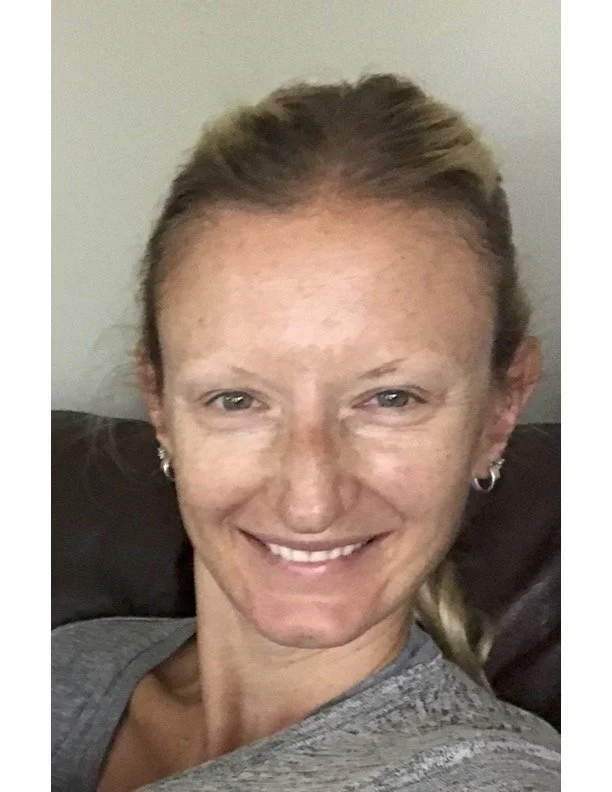
Maria Baranowski recently completed a PhD in Interdisciplinary Studies at the University of Manitoba. She is currently a Research and Evaluation Consultant at St. Amant Research Centre in Winnipeg and a policy writer in the Master’s of Applied Human Nutrition program at the University of Manitoba. Maria has been a registered dietitian since 2006, and the owner of a private dietetic practice since 2014. She is a mom to 3 boys and a parent advocate for inclusion.